
South Dade
Noisy Garage Door Repair in Redland
A noisy door still travels on its own, yet a squeak, a grind, or a pop marks a part that is wearing out. People search those three sounds, and sometimes one bang overhead with a door that feels heavy. That bang belongs to a spring, while the other noises come from rollers, hinges, or track. This work replaces the loud roller or hinge and leaves the quiet hardware in place.
Which sound points to which part
A squeak at one height is often a dry roller stem or a hinge pin that wants lubricant. A grind usually means a roller went flat and is sliding on the track instead of turning. A pop can be a roller entering a loose hinge, or the door rubbing a shifted bracket. One bang overhead, together with sudden weight, is a torsion spring and a different repair entirely. Several sounds can stack, so the height where you hear them is worth reporting.
What you can try before anyone arrives
A light garage-door lubricant on the roller stems is fine for a dry squeak. Do not put that oil on the springs, and do not coat the track where it holds grit. Stop if you heard a bang or the door has turned heavy in your hands. Leave the springs, cables, and set screws alone while you track the noise down. If you see a flat roller at the grind, leave that wheel alone.
Replace the loud hardware only
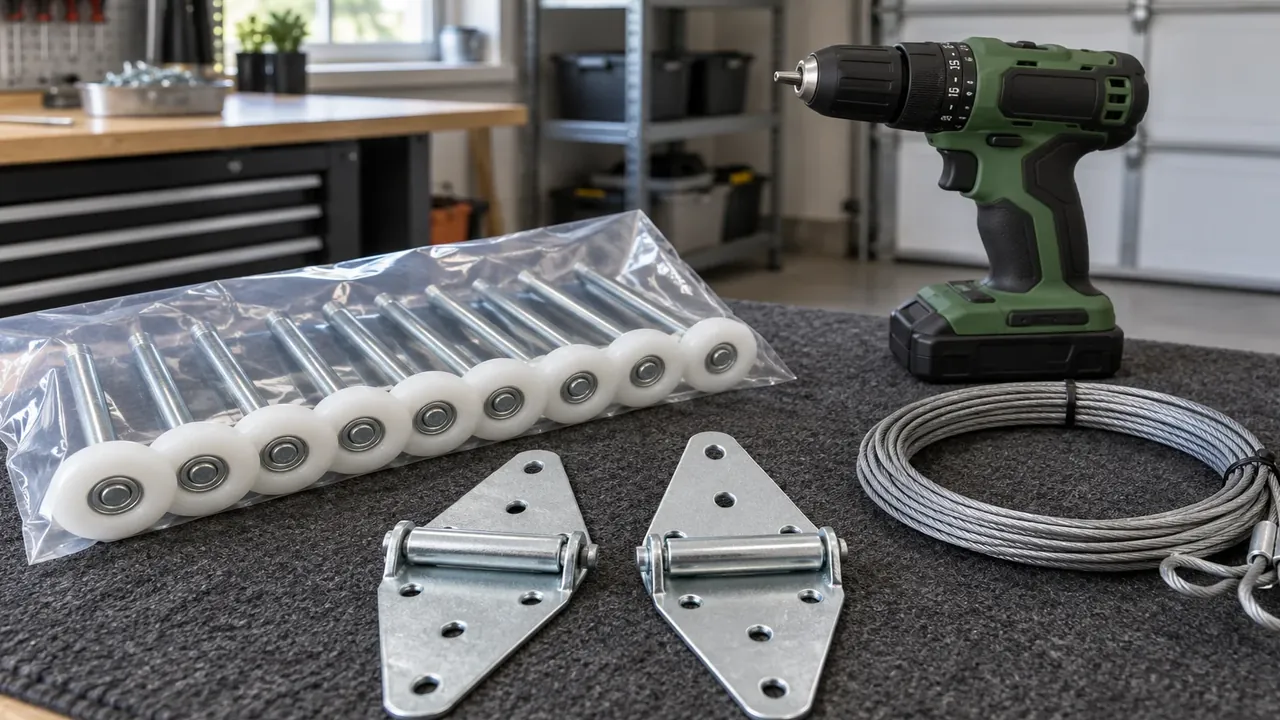
The noisy roller, hinge, or track spot is found, and that piece is replaced. Quiet rollers stay when they are still round and they still turn freely. A rubbing track may need its bracket moved back into line instead of a new door. A bang plus sudden weight moves the job to the springs, cables, and drums. Lubricant finishes new stems, and it cannot stand in for a flat roller.
Stems, pins, and a rubbing track
Roller stems pass through the hinges and should spin freely once they are clean and lightly oiled. A hinge pin that walks out clicks every time that joint passes the nearest track bracket. Vertical track that shifted toward the jamb rubs the rollers along one side of the door only. Horizontal track can pop if a roller enters it while the door is slightly twisted. Each of those is a small adjustment or a single part, matched to the sound you hear.
Dust from irrigation and nursery rows
Redland noise often starts as irrigation dust on stems, held by humidity rather than sea spray. Groves and nurseries keep that film on a ranch garage door through the damp months. A wider barn-shaped building used as a garage simply has more rollers in its tracks. A long drive means the door may sit, then run gritty when it finally cycles. The loud piece comes off, and every quiet roller stays where it is.
Request this visit.
Call (645) 256-1794 about this door.
We answer any hour Sunday through Friday.
Saturday stays closed.
Keys Door Co is family-owned, local, and insured.
We have worked this coast for over ten years.
Common questions
Is a squeak always caused by a dry roller?
Often the source is a stem or a hinge pin that wants a drop of lubricant. A grind points toward a flat roller more than a stem that only dried out. One bang overhead with a heavy door is a spring, so stop and leave the shaft alone.
Should the springs be oiled to quiet the door?
Oil belongs on stems and pins, not on the coils, and set screws stay untouched. Oil on the track collects grit and makes the following cycle even louder. If the noise was a bang, skip the oil and keep everyone clear of the door.
Do all the rollers need to come off?
Only rollers that are flat, seized, or making the noise need to come off. Wheels that still turn quietly can stay through the rest of the job. A rubbing bracket is its own fix and does not need a full set of wheels.
Request service
Name the street and whether the door is up, down, or stuck.
- Repairs and replacement parts
- Openers and controls
- New garage doors