
South Dade
Noisy Garage Door Repair in Naranja
A noisy door is usually a dry roller stem, a flat roller, a loose hinge pin, or a track that rubs. People search the squeak on the way up, the grind near the floor, or a pop as a roller passes a joint. One loud bang overhead, followed by a heavy door, is a spring rather than a roller problem. A light lubricant belongs on the stems and the hinge pins. If the noise was a bang, stop using the door and leave the springs alone.
What the noise is telling you
A squeak that comes and goes with travel often lives on a stem that has gone dry. A grind is rougher, and it usually means a roller face has flattened or a hinge is biting. A pop at one height can be a roller crossing a track joint or a pin walking out of a hinge. Rubbing along the whole vertical track means the door is brushing metal on every inch. A single bang from overhead, with the door suddenly heavy, points at a spring that opened.
What you can quiet safely
A light garage-door lubricant on a roller stem or a hinge pin is a fair try. Keep that lubricant off the springs, off the tracks, and off the photo eyes. Never touch the springs, the cables, or the set screws, even when the squeak seems to come from above. Stop if you heard a bang or the door feels heavy. Do not pack heavy grease into a hinge, because it collects grit and hides a flat roller.
Replace the noisy roller only
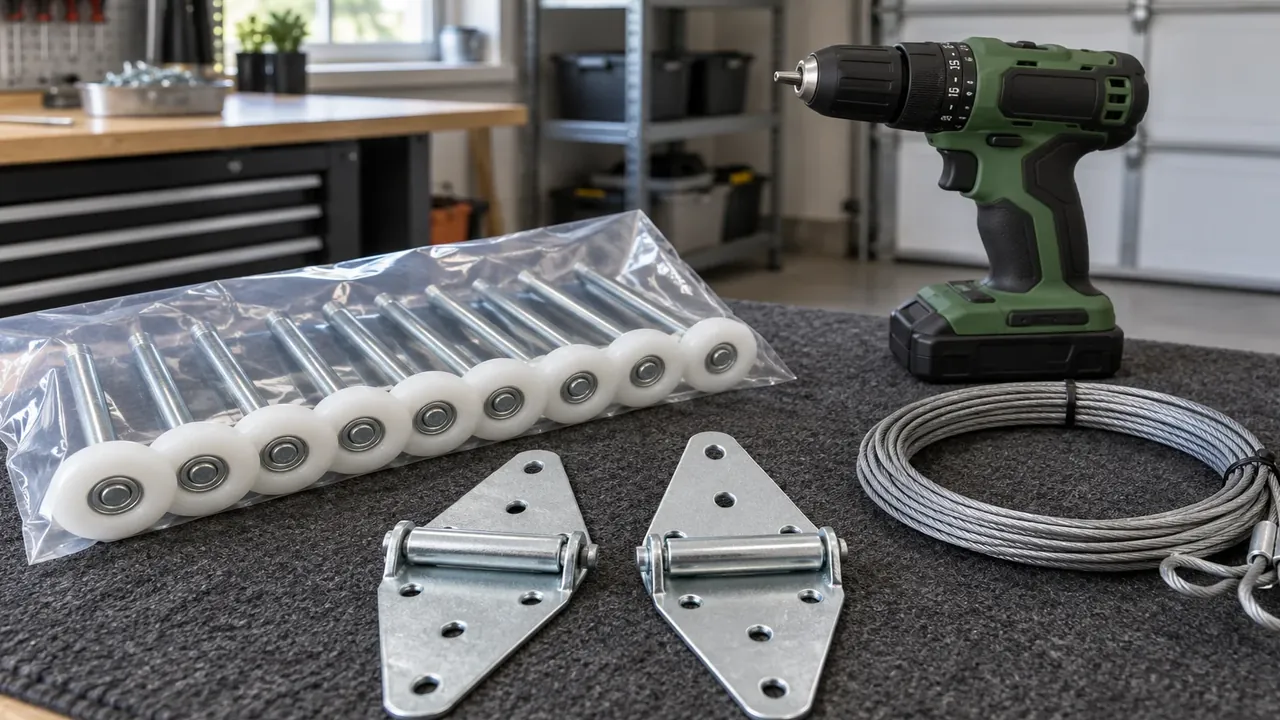
The visit finds the roller, hinge, or track spot that is actually making the sound. A noisy roller comes off, and the quiet rollers that are still round can stay. A loose hinge pin or a hinge that is chewing the roller gets replaced with that noisy wheel. Track that rubs may need a bracket shifted while the door itself stays. A loud bang plus a heavy door moves that job right over to the spring.
Stems, pins, and rubbing track
Roller stems squeak when they are dry, and the tire of the roller grinds when it is flat. Hinge pins pop when they walk out, and the door then chatters at that one joint. A track that is tight against the rollers will hiss or scrape for the full travel. Nylon and steel rollers are matched to the hinge that holds them. A dry stem can be oiled, and a flat neighbor on that side still comes off.
Heat on dry ordinary rollers
Heat under older roofs dries ordinary roller stems until they squeak on every trip. Humidity in these modest slab houses then rusts the hinge pins the heat has been baking. A light oiling helps a dry stem and does nothing for a roller that has already gone flat. Side streets just off US-1 are full of these closed slab bays, so the warmth stays on the hardware. A squeak from heat is separate from a spring that let go.
Request this visit.
Call (645) 256-1794 about this door.
We answer any hour Sunday through Friday.
Saturday stays closed.
Keys Door Co is family-owned, local, and insured.
We have worked this coast for over ten years.
Common questions
Why does the door squeak?
A squeak is often a dry roller stem or a hinge pin that wants a light lubricant. Keep the oil off the springs and off the photo eyes. If the sound is a grind instead, the roller may be flat and due for replacement.
Why did I hear one loud bang?
One bang overhead, especially if the door turned heavy, is a spring problem. Stop running the door, and do not oil the shaft or touch a set screw. Roller noise is a squeak or a grind, and it does not arrive as that single bang.
Must every roller be replaced?
The noisy roller is the one that comes off, and quiet round rollers can stay. A hinge that is loose at that same spot is part of the repair. Replacing the whole set is extra when the rest of the hardware still turns smoothly.
Request service
Name the street and whether the door is up, down, or stuck.
- Repairs and replacement parts
- Openers and controls
- New garage doors